Saturday, April 9, 2022

Excused Absence by Douglas Wilson

 Excused Absence by Douglas Wilson asks the question, "Should Christian kids leave public schools?" He answers it with a resounding, "Yes." As Martin Olasky points out in the Forward, "When God is excluded from the classroom, we are not merely remaining silent about God. We are teaching children that they may safely disregard Him" (11). It is this "disregard" of God that proves fatal to public education. Not only can public schools not acknowledge God, they are incapable of acknowledging the truth about human nature and even truth in general. For this reason, secular education will always fail. 

Wilson begins by making the case that all schools are religious schools. Being public simply means they are teaching a religion that is not Christian. But they are teaching a religion. Education itself is predicated on transmitting values and beliefs to the young. Public schools may not be teaching Christian values and beliefs, but they are teaching values and beliefs. 

Wilson then proceeds to go through the history of public schools to show exactly how we got here. Although America was initially peopled by those with a strong faith, it did not take long for Christianity itself, as practiced in the colonial period, to devolve into a universalist, humanistic theology. While the early schools were explicitly "Christian," they embodied a form of Christianity which "bore no fundamental difference" between it and secular humanism (23).

This implies the problem began, not with schools, but in the home. Wilson blames "countless acts of disobedience in the living room and around the dinner table" for the godlessness of schools (31). Failing to practice "covenantal headship," the people allowed the schools to become places in open rebellion against God. He goes on to state, "If government schools reject the revealed character of God in the Bible as the basis for the ethical instruction they provide to children, then the  only option open to them is to teach on the basis of the character of their new god, demos (the people)" (44). It is at this point that schools became incapable of teaching the good, the true, and the beautiful; without God, none of that is truly accessible. The people, in their failure to repent and practice godly parenting, are reaping what they sowed.

Wilson emphatically states, "Only a Christian education can provide a standard for fixed and absolute truth, and only a biblical course of instruction can set a standard for distinguishing right from wrong" (49).  But once again, Wilson makes clear this begins in the home. Parents must be marked by their own character and courage. True education begins with godly parents instilling their beliefs and values in their children. He quotes the Shema in Deuteronomy 6 as the model for parents (58). Children are to hear the word of the Lord when they sit, stand, walk, lie down, and rise up. The Word should be on the door posts as they go enter and exit. It should encompass the totality of a child's life. Without a Christian education, this is simply impossible.

Christian parents must wake up. "The big lie is that education can be 'religion-neutral'" (67). Yet education is simply "the processor learning how to think God's thoughts after Him" (68). An education which fails to make it clear that our job is to discover what God has already declared "true," is an education based on a false idol. As a society, we are reaping the results of our rebellion. God uses our godless rulers to bring us to repentance. We miss out on blessings, we see a rise in "unnatural passions", we become victims to crime and bad laws, we embrace relativity and cannot experience the joys of men and women serving in their God-given roles. But hope is always at hand. Repent. 

Finally, Wilson addresses some common objections: many Christians were raised in government schools and they are fine, Christian schools are expensive, religion is part of the spiritual sphere of "home" and education falls under the physical realm, a child may be mature enough in his faith to handle it, the local Christian school does not have an adequate athletics program, other adult influences are not Christian, the children require special programs not offered at the Christian school, Chistian school is not "cool," and many of the teachers in the public school are Christians themselves. One by one Wilson demolishes these arguments. Time and again he brings it back to the Lordship of Christ. Either Jesus is Lord and we submit or He is not and we don't. 

Wilson ends with his prescription for Classical, Christian education. He believes this model fully incorporates the kind of education outlined in Scripture. He gives advice for the practicalities of this kind of school. He offers advice on pitfalls to avoid. Overall, Wilson makes a solid case for avoiding government schools and educating children according to the precept found in the Word and embodied in Classical, Christian education. 


Sunday, February 27, 2022

The Pattern of God's Truth by Frank E Gaebelein

The Pattern of God's Truth by Frank E Gaebelein is a timely reminder to Christian teachers and schools that all truth is God's truth. 

    The primary responsibility of a teacher is to lead her students towards the truth of God and into the fear of the Lord, which is the beginning of wisdom. Yet all too often we fall victim to a worldly mentality that treats academic knowledge as distinct from the kind of truth that forms us spiritually. We have made the mistake of applying the label “Christian” to our schools and calling it good. Yet Gaebelein reminds us that all truth is God's truth, and therefore truth, by definition, must be integrated and point to God as its ultimate source. We, as Christians, have no trouble recognizing God as the fount of all knowledge and all truth, but often we teach our subject so removed from this idea that our students are little better off than had they received a secular education. The point of education is to direct our students towards God; knowledge is the path.

    The key to a thoroughly Christian education is a Christian teacher. As hard as it seems to believe, some Christian schools have found the task of hiring only Christian teachers a hurdle too high. Apparently some are willing to compromise for the sake of competence in the subject. Yet Gaebelein insists that teachers must not only be committed Christians, but knowledgeable of their subject and teachers of the Bible. They must have a thoroughly informed Christian worldview. These kinds of teachers will most naturally infuse revealed truth into reasoned truth as they integrate the truths found in Scripture with the truths found in the textbooks. And they will naturally point out errors in the texts when a conflict arises with Scripture. These teachers, fully immersed in a relationship with Christ, are the only teachers suitable to integrating all truth.

    The question then becomes how to practically integrate the material from various subjects with God’s revealed truth in Scripture. Gaebelein starts with the subject he believes most would find difficult to integrate - mathematics. He describes a teacher able to portray the beauty found in the patterns and laws of mathematics that reflect an orderly and rational God. For Gaebelein each subject reveals a portion of God’s character. The teacher who can reveal the beauty of numbers and their relation to each other can also reveal the beauty of a God who made math possible in the first place. Numbers, patterns, rational laws are all the products of a Mind that is rational and beautiful in its orderliness. Two plus two equals four because God created a world that reflects His commitment to order and rules; two plus two will always equal four, in every conceivable circumstance, throughout all time, because God is the same in all circumstances, throughout all of time. He is not random nor changeable. Math is because God is.

    Finally Gaebelein calls us to look beyond the walls of the classroom in our integration of truth. In extra-curricular activities, in discipline, in chapel services, in the marketing of the school, and in our personal search for scholarship, Christians must see everything as a way to lead others to the fear and admonition of the Lord. Often we think of extra-curricular activities as just that, extra. But Gaebelein makes it clear that all activities must point to the character of God and lead students into a relationship with him. Discipline must reflect the sacrificial love of Christ. Our chapel services must direct the students towards a loving and holy God. Marketing must accurately reflect the capabilities and vision of the school. Christian schools must be sold as discipling institutions, not places of career advancement. And Christians must avoid the temptation to shun worldly scholarship pursuits. Some believe ours should be a simple faith and want to avoid high levels of academic achievement. But if all truth is God's truth, more knowledge can and should lead to a deeper love and understanding of God. 

    Christian education is a high and holy calling. It is not for the faint of heart. “But for those who are called, for those who have for youth a Christ-like love and sympathy, Christian education is a glorious work. It means dealing with the most important and precious material in the world -- growing human souls. Few professions bear so plainly the marks of the Lord Jesus, which are the marks of self-sacrifice.” (108)

Sunday, December 12, 2021

Doing Life With Your Adult Children by Jim Burns

I decided to read Doing Life With Your Adult Children by Jim Burns because, well, I have adult children. And it seemed an appropriate read. 

Ever since first becoming a mother, I would say my main identity was "mom." Once it hit me that my oldest would be going off to college, I wondered if I counted as "mom" anymore. Was there still a role for me going forward? Turns out there was, but it was different. It was mostly limited to scheduling flights back and forth to college over breaks, and writing tuition checks. Check-ins over the phone provided a connection, but it was not the same.

Then came marriages and it felt like the final tie to "mom" was severed. I know, I know. I'll always be a mom, yada, yada, yada... But not really.

So how, after 20 + years of being "mom" does one become someone's "mother"?

Burns response is to "keep your mouth shut and the welcome mat out." Welp. 

Burns is highly encouraging for moms like me struggling with the next stage. One of his most helpful statement is that we didn't screw up our kids! We need to see them as differentiated adults; they are not simply reflections of us. 

"But what about..." I hear some saying. Burns has a chapter for that. Whether its children who walked away from the faith, are making bad financial and personal decisions, have in-law troubles, or have generally failed to launch, Burns has words of wisdom. It makes me grateful that the worst thing I can say about my kids is that they grew up to become independent, fully-functioning adults. 

It's a good reminder that we as parents are only on the job full-time for a season. Our job, as I often told my own daughters, is not to raise children, but to raise adults. 

It doesn't mean I don't miss the "Mom!!!" cry once in a while.

Friday, October 8, 2021

Jefferson's Daughters by Catherine Kerrison

I do love history, especially American history, and I'm partial to the Revolutionary and Civil War periods. A friend thought I might like Jefferson's Daughters by Catherine Kerrison because it is such a little known aspect of history and involves women. Unusual. I did like the book. It gave a unique look at Thomas Jefferson. But I did have one problem with it. It made far too many assumptions concerning Sally Hemings and her children. I, personally, am not convinced that Jefferson did father her children. Although most historians concede his paternity, there is evidence to the contrary. 

That said, even if he did father Heming's children (which Kerrison takes as undisputed fact), Kerrison admits to a lot of speculation. As there is almost no historical information on Hemings or her children, Kerrison is forced to make assumptions and say what "could have" or "might have" happened. Also, Sally Hemings was only 1/4 black and her children would have been 1/8. From what I've read in other sources, most went on to become part of white society after Jefferson's death. This complicates the narrative, I think. Generally Jefferson is thought to have basically repeatedly raped a very young slave (Sally) and then neglected the resulting children. If the children are his, this is a bad story. If they are not, Jefferson was very generous with what were possibly his philandering brother's offspring, setting them up to eventually go on to lead lives as they chose. 

So those assumptions bothered me.

But the parts that were more definitive, about his daughters with his wife, were much more interesting. I especially loved reading about the education they received and the desire they had to pass that education onto their children. As much as possible, he wanted them educated like boys when in America and then with the finest female education France had to offer. While Jefferson may not match up to our standards today for a female-affirming man, he definitely displayed some traits that were most likely rare in those days. 

His friendship with Abigail Adams was also touched on vis-a-vis his trips to Europe. Having read a book before about Adams, his relationship with her and her sentiments rang true. 

The book is worth reading, if only for a different glimpse into Thomas Jefferson.

Thursday, July 15, 2021

Life with a Capital L by Matt Heard

My headmaster, Mr. Hinton, asked the staff to read Life with a Capital L by Matt Heard over the summer. He wanted us to reflect on the ways we can lead with love when it comes to our students. Then he asked our brand new Seminar team to lead the discussion. 

Talk about trial by fire!

The book begins with a discussion of a painting Calle There is Life Everywhere by Nikolai Yaroshenko. The painting depicts several people trapped in a train freight car marveling at the birds eating just outside the barred window. Yet on the other side of the car, another cellmate looks out the opposite window, apparently heedless of the life just outside the car. 

Heard uses this painting as a discussion jumping off point: Even in the midst of extreme hardship, life and love remain. 

To begin, Heard defines what it means to be human: “My humanity is my capacity to embrace the significance of my existence – and yours – as images of God in his creation” (10). This understanding definitionally puts us into relationship with others in order to be fully human. 

As humans, formed for relationship, we experience a deep longing: “My longing can serve as a connection, a sort of breadcrumb trail that I can follow as I’m orienting myself toward Home. In my deepest longings I can gain clues regarding who I am in the universe” (25). As C.S. Lewis says, we long for something eternal that can only be satisfied by the eternal.

Yet we can easily use that sense of longing in a pursuit of inferior objects: “A superficial and therefore short-circuited engagement with my longings leads to a superficial and therefore short-circuited engagement with the gospel...A more substantive engagement with my longings has to be accompanied by an authentic, substantive engagement with the gospel” (33-34). Jesus message of Good News must center our deepest longings.

Yet even this focus on the eternal can lead us astray: “Something is dreadfully awry with the ways too many of us minimize and reduce the gospel: Receive forgiveness. Gain heaven. Behave morally in the meantime. Subscribe to a doctrinal statement. Go to church. Tell others about him” (47). We can and must begin that eternal life NOW.

The doorway to that life is Grace. To enter true eternal life we must come to recognize the grace that God does out extravagantly: "Grace is God lovingly giving me what I need instead of what I deserve. It's God lavishly giving me what I long for but not necessarily all that I think I want" (56).Truly understanding and living in gratitude for that grace allows us to enter in to the feast that life is meant to be.

Living Life with a Capital L richly rewards us in the here and now. We experience freedom: "If I'm going to actually experience freedom, I've got to learn to pursue Life by practicing righteousness--learning to walk righteously. That will involve--drum roll here--obedience" (83). Not obedience to human-made rules--that's legalism--but obedience to God's commands as a response in gratitude. Our rebellion to God creates our own prisons. Only obedience to God frees us.

We also gain protection for our hearts. Lewis describes "Men without chests." These are people governed by minds and bellies. "Full humanity means an engaged heart. An engaged heart means I am actively balancing my mind and my emotions, which will activate my will in a healthy way" (94).

We can truly appreciate beauty. "Beauty speaks to me, sings to me, welcomes me and summons me into the presence of something that is life saving, life affirming, and life giving" (107). True beauty points to the divine. All other forms of "beauty" are counterfeits designed to lead us away from Him. Life with a Capital L points towards God and therefore towards beauty. And beauty os the portal to abundant life.

We gain illumination. We naturally live in the dark. But the Word "is a lamp unto our feet." Jesus is that light, and that light shows me how to be fully human.

Our lives become part of bigger story. Our society is one of atomized humans each acting in his own story. We lack connections to anything greater than ourselves. But the gospel-centered life connects us with God's glory. We become "men and women who, with the turn of every page of their stories, discover new paragraphs of purpose as they echo God's significance and experience his enoughness in the drama of their everyday lives" (143).

We experience true worship. "Every activity of my life--my vocational calling, my recreation, my relation. ships, my education, my sacrificial service, and my communication of gospel hope. people whom God places in my life, even my intentional rest--every endeavor be comes a way of acknowledging God's worth in my life (156).

We learn to give life a way and truly love. "At any given moment, everyone of us is predominately more a bucket or ap pipe. I call it plumbing theology" (164). We are either bottling up God's love or we are a conduit. Living Life with a Capital L allows us to channel that love through ourselves and towards others, thereby experiencing more love ourselves. Oftentimes, "we're not enjoying Life or loving others as well as we could because we're not experiencing God's love as fully as we could" (170). Be a pipe.

We experience time in a new way. Psalms says, “Teach us to number our days aright, that we may gain a heart of wisdom”(90:13). We often move through our days with little reflection or understanding of the gift that we have been given. “The average human looks without seeing, listens without hearing, touches without feeling, eats without tasting, moves without physical awareness, inhales without awareness of odor or fragrance, and talks without thinking.” (Leonardo da Vinci). But a life lived in appreciation of the grace that has been given shifts our focus and time becomes the gift it was always meant to be.

And yet we are broken. Living Life with a Capital L redeems and makes room for that brokenness. “In the echo of explosions along our journey, it’s tempting to forget that Life with a capital L actually unfolds in the midst of the land of the shadow of death. It’s a place where broken hopes and shattered dreams happen more often than we could ever be comfortable with” (199). We can experience the redemption only the broken can participate in. And we can extend that grace to others.

We can live in the shadow of heaven. As Lewis so eloquently state, “There have been times when I think we do not desire heaven; but more often I find myself wondering whether, in our heart of hearts, we have ever desired anything else... It is the secret signature of each soul, the incommunicable and unappeasable want, the thing we desired before we met our [spouse] or made our friends or chose our work, and which we shall still desire on our deathbeds, when the mind no longer knows wife or friend or work” (216). Heaven is the ultimate form of life lived with a capital L. And as we live that way on earth, we reach our hands towards heaven.

This book is a sweet and beautiful reminder of the goodness of God. Told largely through stories, it is an easy read but a difficult journey. Life with a Capital L is the "abundant life" promised by Christ. And it is ours if we desire it. 


Friday, July 9, 2021

The Miraculous Journey of Edward Tulane by Kate DiCamillo

For our summer reading, Mr. Hinton asked us to read The Miraculous Journey of Edward Tulane by Kate DiCamillo. She is the same author who wrote Because of Winn-Dixie and the Tale of Despereaux. In short, her books are delightful and this one proved the rule. 

Edward Tulane is a stuffed rabbit of the finest quality and craftsmanship, wearing clothes of the most gentile fashion. And he knows it. Although his girl Abilene dotes on him, he could not bring himself to appreciate her in the same way. Only grandmother Pellegrina recognized the haughty spirit of the bunny. 

This story goes as stories must and Edward is separated from Abilene. Through a series of misfortunes he is accidentally thrown overboard into the sea. Of course toy rabbits cannot die and Edward had months to consider his plight while on the ocean's floor. He eventually lost hope that Abilene would come for him and began to suspect that Pellegrina was somehow behind his travails. 

A storm eventually results in tumbling Edward into the net of an ancient fisherman. In his joy at being rescued, Edward forgives the man for calling him an "it." Nellie, the wife of the fisherman, recognizes the marks of greatness in the naked, water-logged toy. Although to his shame, Nellie believes him to be a "she." Whose name is Susanna. Who wears frilly dresses. And yet... Edward found himself listening to Nellie's stories as he had never listened to Abilene's prattle. Nellie, in her simple way told him of her children she loved and those she had lost. Perhaps the ocean bottom had seeped into his brain.

It couldn't last. Fearing her parents were becoming too attached to the "rabbit child," their daughter Lolly sent Edward off to the dump. Edwards heart broke and yearned for Nellie and the old man. Contemplating Pelligrina's disappointment in him, Edward began to realize he had not loved, but only tolerated Abilene. Maybe his feelings towards Nellie were love. But it was too late.

Suddenly the dog of hobo sniffed Edward and fetched him as a prize for his master, Bull. And so Edward set off on the life of a tramp, Malone, a rabbit on the run, sleeping under the stars and contemplating his life so far: those he began to realize he loved and those he had lost. He lost Bull as well, tossed from the train by a cruel companion.

Eventually Edward is rescued by a boy named Bryce who believes Edward would make a fine present for his sick little sister, Sarah Ruth. Edward actually feels joy at the thought of being a child's toy again. Rechristened Jangles, Edward soon realized Sarah Ruth existed in a precarious situation of poverty, sickness, and abuse. After six months Sarah Ruth succumbs to her illness. Her neglectful and abusive father weeps as his loss. When Bryce says the man has no right to mourn, he replies, "I loved her." "I loved her too, thought Edward. I loved her and now she is gone. How could this be? he wondered. How could he bet to live in a world without Sarah Ruth?" (p. 150)

While on the run with Bryce, Edward chances to meet old Pellegrina. In desperation, he thinks, "Look at me. You got your wish. I have learned how to love. And it's a terrible thing. I'm broken. My heart is broken. Help me." Pellegrina walked away. But neither Bryce nor Edward will see his luck change. Edward's china head is smashed into pieces by an angry restauranteur. But Bryce, displaying sacrificial love, takes the rabbit to a doll mender. Given only two options, pay for the repairs or give up the rabbit, Bryce surrenders the only remaining tie he has to Sarah Ruth. Edward will live again. 

Sitting on the shelf with the other dolls for sale, Edward has decided he is done with love. It is simply too painful. And yet... he was haunted by the last words of an antique doll as she went out of the shop, "Someone will come; someone will come for you." Hope flickered, but the years passed. But the old doll was right; someone did come. In fact as little Maggie begged for the the rabbit, Edward recognized his old pocket watch around the neck of her mother. Abilene. 

And Edward went home.


Thursday, June 10, 2021

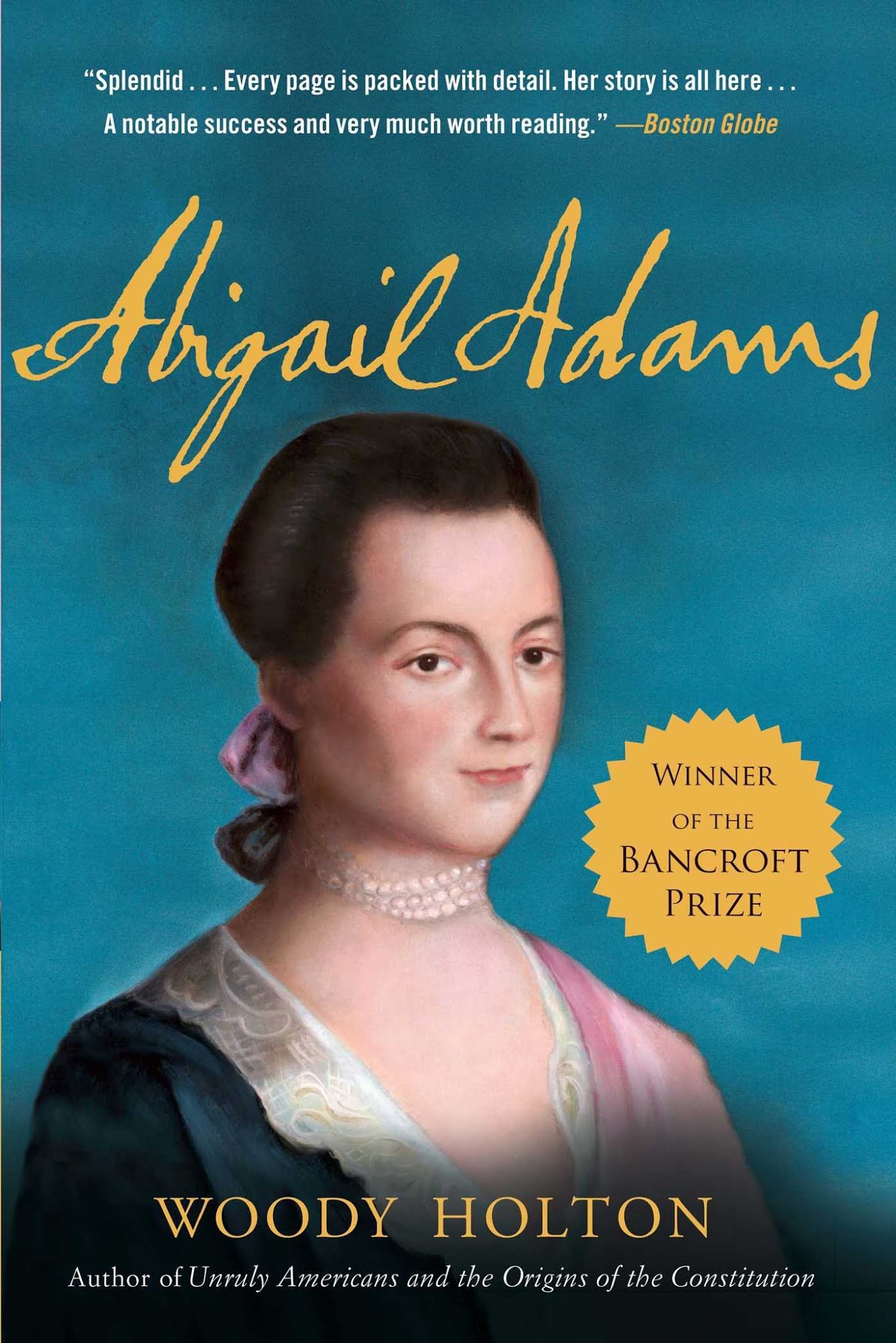
Abigail Adams by Woody Holton


Our book club decided to read Abigail Adams by Woody Holton. I love American History so it seemed right up my alley. Being that it focused on a woman made the book unusual. 

While I enjoyed getting to know her through her letters and other correspondence, the author seemed intent on relating each revelation to the extent to which she espoused feminist principles. While acknowledging that she was not a modern feminist, she definitely pushed back against a system designed to bring women and all their concerns under the authority of their husbands. Most notably, Abigail Adams had her own finances and invested her own money. While technically not legal, she made it work and became quite a financial wizard. She eventually left her substantial fortune almost exclusively to female relatives, thereby offering them a chance to do what she did and maintain financial independence.

More interesting than her "feminist" principles, I enjoyed getting to know her as a wife and mother. She and John spent most of their years apart. Yet they maintained a healthy and happy marriage. They watched their children grow, die, fail, and succeed. I related to this part so well. It's tough to have adult children whom you can only watch, but no longer directly influence. Although like any "good" mother, Abigail did call in favors when she felt it warranted to help her children. She particularly embarrassed John Quincy with that tactic. Yet her children seemed to love her and esteem her. None seemed to resent her interference.

I love the humanness of it all. She was a fierce patriot, sister, wife, and mother. Her interest in politics did not extend to necessarily wanting the vote for women or seeking higher office, but she definitely had opinions and believed women should be educated and literate citizens. She was fiercely loyal to John, who took a lot of abuse during his time. Yet she also kept secrets from him if she thought something would meet with his disapproval. Like any good wife, she knew exactly how to influence him and his decisions if she thought he needed prodding. Her constant correspondence with her sisters shows a loyalty that lasted her lifetime. They were always looking out for each other with Abigail playing the mother hen. But her role as a mom made the biggest impact on me. She so fiercely cared for her children. Although they were far away and communication was hard, she kept in close contact with each, offering advice and doing all she could to manipulate them to move closer to home. (That's where I relate.) As a mother, she took extraordinary steps to help her children in whatever way she could. Yet she often had to watch helplessly from afar. Marriages and jobs and disease distanced each of them at various times. I also loved that she was raising a child for almost her entire life. Her home was open and if a grandchild, niece, or nephew needed a place to stay, she would immediately volunteer. Time and again she offered her hospitality to all who would take it. It was remarkably easy to relate to her, her life, and her choices.

While the constant focus on the feminist aspect of her character was clunky at times, I truly enjoyed getting to know this opinionated, intelligent, and fiercely loyal woman. I think I would have liked her.