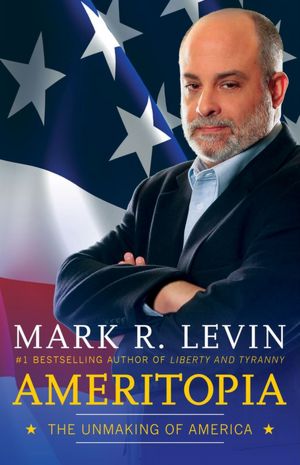
After America by Mark Steyn is another one of in a long series of books detailing America's decline and looming destruction. I loved it! It's the lighter, wittier version of Ameritopia. If you only read one, figure out if you want the philosophical underpinnings of America explained or if you want the hyperbolic wit from a foreigner's perspective. I think they make a great set.
He begins by laying out the fact that we are broke. Already. Not some looming future brokeness or possibility of default, but actually, factually, broke. He uses a metaphor from Daniel to say that after partying too hard, the writing is already on the wall. Stating facts and figures to show how the interest on the national debt will be our undoing, Steyn gives the alarming fact that by 2020, only 8 short years away, the interest on the debt will consume 15-20% of federal revenues up from 9% today. Unsustainable. He sums up the depressing prologue with a great quote from economist Herbert Stein, "If something cannot go on forever, it will stop." That stop will be painful, but it is inevitable. We WILL stop borrowing and spending one way or another.
Steyn starts off right away in Chapter One stating that we are in fact already in decline. We are not going to decline or face the possibility of decline, we are in decline, but just don't realize it yet. He brings up things like our lack of innovation. A visitor from 1880 would be amazed to see the technology of 1950, but perplexed to see the lack of forward movement between then and now. In fact, Steyn quotes a professor stating that he believes the reason we haven't returned to the moon is because we can't! We have lost our ability to innovate. We have been overwhelmed by bureaucracy that has frozen all technical creativity in its stifling labyrinth of rules. See: 911 memorial.
In our decline, we have become a nation of children, wholly dependent on a benevolent government. Tocqueville prophesies all too well what kind of a despot could come to rule in a democracy like America. "...it seeks,... to keep [the citizens] irrevocably fixed in childhood... it provides for their security, foresees and supplies their needs, guides them in their principal affairs... The sovereign extends its arms about the society as a whole; it covers its surface with a network of petty regulations - complicated, minute, and uniform - through which even the most original minds and the most vigorous should know not how to make their way... it does not break wills; it softens them, bends them, and directs them... it does not tyrannize, it gets in the way... and finally reduces each nation to being nothing more than a herd of timid and industrious animals, of which the government is the shepherd." I include such a long quote because no one could say it more perfectly. Tocqueville so presciently saw the danger of a republic, we elect our own despots and they lull us to sleep. Those few who still work and contribute to society do so only to provide for the government's favored classes. It's called "fairness."
Steyn compares us to Greece, the only difference being that they are further along on the path to ruin than we are. They have already run out of people to stick the bill for their welfare state to. And like them, we are disregarding the signs of our decline. The generous collectivism of big government makes the individuals more selfish. Who will give up the goodies for something so archaic as the good of the country? He believes that "Europe's economic crisis is a mere symptom of its existential crisis: What is life for? What gives it meaning? Post-Christian, post-nationalist, post-modern Europe has no answer to that question, and so it has 30-year-old students and 50-year-old retirees, and wonders why the small band of workers in between them can't make the math add up." The math doesn't add up over here either!
Using H.G. Wells book, The Time Machine, as a prophetic novel of modern America, Steyn begins to show how we have become divided onto two groups - the small, soft, passive, genderless elites, called Eloi, and the more dark, feral underclass, the Morlocks. Our modern Eloi have transferred large amounts of money to the unproductive underclass as a way to avoid thinking about them. We have become rich enough to be stupid. We are rich enough to enjoy the benefits of property while decrying the very things that make prosperity possible. We like our nice cars but distain the oil that powers them. We are rich enough to elect Barack Obama on a such an ephemeral plan of hope and change, who believes, "We are the ones we've been waiting for." We feel good. We don't have to do good. We don't have to grow up. The embodiment of the Eloi that Wells describes is Oscar van den Boogaard, the Dutch gay humanist. Upon seeing the decay of Europe and the rapid Islamization of the Continent, he states, "I have never learned to fight for my freedom. I was only good at enjoying it." Where are the men? Where are those who would fight this decline? They have become the Eloi. Stupidity has a price to be paid eventually. And the jig is up.
Great Empires decline. Britain did. We are following in her path. Global dominance transferred rather peacefully from Britain to her offspring across the Atlantic. They have in fact sunk so low as to seem to have no point whatsoever in global affairs. Steyn states, "American exceptionalism would have to be awfully exceptional to suffer similar expansion of government and not witness, in enough of the populace, the same descent into dependency and depravity." We are following Britain "into the dank pit of transgenerational dependency, a failed education system, and unsustainable entitlements, even as it makes less and less and mortgages its future to its rivals for cheap Chinese trinkets, most Americans assume that simply because they're American they're insulated from the consequences." To have been born an American was to win the lottery of life. It will not always be so.
"As disastrous as the squandering of America's money as been, the squandering of its human capital has been worse." We are failing in more ways than just economically. Jobs and industries are disappearing. Neighborhood are in decay. Education is in the toilet. See: Detroit. We did this to ourselves. We'd like to believe that if we just get the economy under control we'd be fine. Representative Mike Pence debunks this notion. "To those who say we should simply focus on fiscal issues, I say you would not be able to print enough money in a thousand years to pay for the government you would need if the traditional family collapses." Currently the world is dividing into two extremes: the advanced world increasingly centralized where every aspect of life is micro-managed, and the reprimitivizing world. As the book, The Suicide of Reason makes clear, tribalism will defeat the civilized world in the end. We have sown the seeds of our own destruction in our desire for multiculturalism and tolerance.
With the election of Obama, America decided to abdicate our position as a global super power and "city on a hill" for other nations to emulate. "Today we have post-modern, post-great-power rivalry, in which America envies the way the beneficiaries of its post-war largesse have been able to opt out of the great game entirely." We'd like to vote ourselves off the island and be just like everyone else. We begin this process by abandoning our commitment to Israel. "But in leaving Israel to its fate we have told our enemies something elemental and devastating about the will of a decaying West, and of the supposed global superpower." As our foes around the world recognize our decay, we will become the New Jerusalem and finally understand what it means to be the global target of destruction.
Steyn spends an entire chapter describing America after the fall through a letter from the future. Let's just say, it isn't pretty. America has devolved into a balkanized shell of its former self.
Finally he sums up our situation with a chapter entitled, "The Hope of Audacity." We desperately need to become the type of people who make America the type of place where the right thing to do is politically profitable. Remember we did this to ourselves. We cannot blame others for an environment we created that makes it politically expedient to do the wrong thing.
So, what's to be done?
De-Centralize: or as Mark Steyn puts it, "Screw the state. Let's do it ourselves."
De-Governmentalize
De-Regulate
De-Monopolize
De-Complicate
De-Credentialize
Dis-Entitle
De-Normalize
Do get out into the real world and see how reality works.
Finally, my favorite - Move to New Hampshire with the Free State Project! The motto in New Hampshire is "Live Free or Die." It sounds like a battle cry. "We'll win this thing or die trying.... But in fact, it's something far less dramatic. It's a bald statement of the reality of our lives in the prosperous West. You can live as free men, but if you choose not to, our society will surely die."
Live free or die.
I love to read. And write. I have very eclectic tastes in books and if I don't rant about them here, I'll drive my family and friends crazy. Since I read so much, I thought it best to record summaries of what I read here. This way all my reading is not in vain!
Tuesday, March 13, 2012
Tuesday, February 28, 2012
Ameritopia by Mark Levin con't
Sixty years later, Alexis de Tocqueville, the French thinker and philosopher, visited America to report on our experiment. He found the American people reveling in their freedom, enjoying their democracy, and taking advantage of a system that allowed upward mobility. Americans believed strongly in the sovereignty of the people, and this belief was deep-rooted and widespread. No one was going to dictate to the very independent minded American people.
Yet Tocqueville recognized a very real threat lurking in the future, the desire for egalitarianism. This abandonment of liberty as the chief ideal and a desire for equality of outcome instead seems to be at the core of man as he looks jealously at the wealthier citizen. Tocqueville was heartened by the lack of desire for equality of outcome among Americans. Liberty remained their chief desire and Americans celebrated wealth as an end to be admired and sought after by every citizen. Tocqueville did not find an America of envious, power-hungry people, but rather a country of freedom-loving, self-governing people who would not abide a government overstepping its bounds in the name of equality.
Tocqueville believed America's free market provided the greatest opportunity anywhere on earth to become prosperous. He realized that American knew their system led to wide disparities in wealth, yet Americans felt that as long as everyone had an equal shot, there was no need to plunder the wealthy. Most Americans led middle-class lives, neither obsessing over wealth nor envying the more prosperous citizens. He saw that the danger democracies faced came in a form of the soft-tyranny of a government inserting itself to "help" the less fortunate. While he could not name the menace he feared, Plato had already identified it - Utopia. Democracies are especially vulnerable to this beast because even when the government controls every aspect of the citizen's life in its never-ending reach for Utopia, the people are lulled into a dull complacency with the belief that they still maintain sovereignty. In short as government interferes more and more, we cannot be trusted pick the type of light bulb to use, but we can vote for our leaders so we believe we are still in charge.
Fast-forwarding to modern times, it is clear we have succumbed to the beast. While our Founders argued among themselves about the best way to limit a government that would most naturally become tyrannical, modern Americans argue about how much bigger the government can get. The anti-Federalist believed the Constitution would not be strong enough to contain power-mad men. They were right.
Our downhill journey began with Woodrow Wilson, the Princeton University president and President of the United States in 1913. He despised the idea of limited government as it did not allow him to do all he wanted to do. Our current President mirrors Wilson in this belief as he rails against a Constitution limiting how much he can accomplish. Wilson believed the government to be alive and limiting it or dividing its power would only kill or weaken it. Wilson denigrated Montesquieu's well-thought out insights and valued Hobbes' Leviathan instead. He believed with Hobbes that since man had given up his power to the government, the government was right in all it did. The Constitution had created an inefficient government where someone as wise and all-knowing as Wilson was limited in how fast and how widespread he could change the country into his version of Utopia. Wilson turned the whole idea of Americanism on its head, creating a living, breathing Constitution which could mean whatever he wanted it to mean. Unfortunately as the Founders would agree, a living, breathing Constitution is nothing short of a living, breathing tyrant.
FDR took Wilson's ideas as a blueprint for his own administration. He, too, recognized that the government moved too slowly for his liking and was appalled by the lack of progress he saw. He believed it was the utopians who sought to take our country into a glorious future and the conservatives who fought to hold it back. He rejected the idea of rights given by a Creator and substituted them with government-given rights to things like a house, a job, healthcare, education, and economic security. (This new Bill of Rights, proposed in 1944, strangely mirrored the one proposed by Marx in the Communist Manifesto.) The difference between the view of "rights" that the Founders held and FDR's is that rights given by God cannot be taken away, except by God, and come at no one else's expense. FDR's rights all had a price tag to be paid by fellow citizens. Government-given rights can be stripped away by that same government when it becomes politically expedient, but not without first throwing the populace into crippling dependency. Government, in FDR's view, existed not to protect private property as the Founders believed, but existed to redistribute it. Of course, over time, nothing will be left to distribute by even the most intellectual of leaders.
Today, we have arrived at the dangerous blend of Utopia and Americanism. Levin calls it Ameritopia. We have let the wolf in the gate by allowing our government to take more and more power. Yet we are lulled into complacency since we are still able to vote. In truth, we are only able to vote for which despot we want in office. We have surrendered our liberty for the false promise of perfection. There is no such thing. Man is fallen and society is not perfectible. No mastermind will ever accomplish the goals of the utopians. It is simply not possible for any one man or group of man to have all the knowledges of millions of Americans making decisions in their own best interest. Yet we have given up more and more of our freedom to choose for the ever-illusive perfect world.
Levin states, "The Founders would be appalled at the nature of the federal government's transmutation and the squandering of the American legacy. The federal government has become the nation's largest creditor, debtor, lender, employer, consumer, contractor, grantor, property owner, tenant, insurer, health-care provider and pension guarantor. Its size and reach are vast. Its interventions are illimitable." Levin believes the American character is strong enough to return to our true values. He hopes it is not too late to resist the appeal of radical egalitarianism in exchange for liberty.
He's wrong. It is too late. America as the Founders envisioned it, has failed.
Friday, February 24, 2012
Ameritopia by Mark Levin
I don't think another book has depressed me so much as Ameritopia: The Unmaking of America by Mark Levin, and I am including Who Killed the Constitution and The Suicide of Reason.
Levin begins by reviewing the early purveyors of Utopia and the subsequent revelation that nothing short of totalitarianism would result. He begins with Plato's Republic. Plato describes an Ideal City run by Philosopher Kings. The individual is therefore subservient to the all-knowing and wise state. In his writings, Plato "sought to avoid the disintegration of society and the onset of tyranny but his solution was a totalitarian City destructive of human nature." Traces of Plato's Republic are to be found in subsequent Utopian ideologies.
Next up for discussion is Thomas More's Utopia. He describes a fictional peninsula, cut off from the mainland by a trench and turned into an island, in order to provide the kind of isolation needed for any Utopia to exist. The good King Utopus has segmented his society into cities and neighborhoods each a carbon copy of the other. Citizens are forcibly moved when the population grows too large. All jobs are regulated and assigned. A small number of people are allowed to hold powerful positions and all decisions are made by them. Every element of daily life is strictly regimented. While well-intentioned and designed to end the more troubling aspects of a free society, More would destroy individual sovereignty and free will and create a tyrannical society.
Hobbes's Leviathan is the next classical work described. Believing that the natural state of man was fear, anxiety, and conflict, Hobbes felt man unable to govern himself. Therefore, a single person or assembly of men must rule over them. Although he sees man as fallen and sinful, somehow he believes a pure ruler(s) can rise and lead them. He believed everyone would willingly transfer all rights to the Sovereign in exchange for protection from the terror of the natural state. Since the Sovereign would be chosen by the people, whatever he did would be definitionally as a representative of the people. No one could disagree with or call anything unjust done by the Sovereign because he would be in effect condemning himself. This all-powerful government, called Leviathan by Hobbes, offers the better of a (false) choice between despotism or anarchy, as man cannot be trusted to govern himself.
Marx and Engels picked up on the Utopian theme in their Communist Manifesto. They believed all the disfunction of society begins in the idea of private property. All material wealth must be eliminated and all property held by the people in common. Knowing this would be an uphill struggle to get people to accept the loss of property, they advocated the complete destruction of all of society - the family, religion, traditions, customs, institutions, eternal truths - and replacing it with Communist indoctrination. Once the people abolished all remnants of the flawed bourgeoisie society, the state would simply fade away as each member lived in perfect harmony with each other. In reality, this utopian ideal worked out somewhat differently. Rather, "the entire society must be brought down to its lowest level. Individual sovereignty must be wrung from the human character; everyone becomes a slave to the state." The pursuit of perfect egalitarianism is merciless and relentless.
After reviewing the literature by those promulgating Utopia, Levin turns to the authors that influenced the Founding Fathers of America in their creation of our country. John Locke sought to counter Hobbes's view of the natural state of man and explored humanity's true nature. Without a true understanding of the human condition, all systems of government are destined to fail. In The Second Treatise of Government, Locke introduces the idea of humans having God-given inalienable rights, and therefore being equal amongst each other and before God, while recognizing unequal outcomes will surely result. He believed that men would generally work together for the common good in the state of nature. It was only when an individual went outside the law of nature and violated one's God-given rights that war and conflict resulted. Government would be created in order to clearly define the standing rules to live by and enforce them in a fair and impartial manner.
Locke also delved deeply into the matter of private property. Believing the earth and all that is in it to be a gift from God, which no man owns, he begins by defining our most basic possession as our own labor. However, once labor has been joined to creation, the man now owns that which he labored over. While the earth is held in common, a farmer my rightfully claim the crops he grew from the earth and the land he tilled as a result of the labor he put into it. Locke believes there will always be enough natural resources and therefore man will never run out of areas to claim as private property once he has invested his labor into it. This labor not only benefits the man, but all of society seeing as he has now improved what was once common. Also, no man may make a claim upon another's property as it rightly belongs to the one who improved it. In addition, every man is free to labor and so gain his own private property. Private property is therefore inextricably linked with liberty, and a government exists to protect both.
Locke argued for a representative, but limited government. He knew his history too well and could see that power is self-perpetuating and eventually destroys liberty. He argued first for a Legislature to create impartial laws, then for an Executive to enforce those laws, and finally for an indifferent Judiciary to adjudicate matters that should arise. However, even a representative government with three branches dividing power can become despotic should it cease to protect private property. In such cases, under the most extreme of cases, the government loses its legitimacy and so must be overturned. Obviously, Locke had a tremendous influence on the Founders, who would have found the Utopian totalitarian models repugnant and against the very nature of man.
A second philosopher to greatly influence the founding ideals of America was Charles de Montesquieu. He also wrote at length about the form of government and the nature of man in The Spirit of the Laws. Montesquieu however, did not have to imagine the natural state of man, he had only to look to the American colonies. Where very little government existed, Americans had formed civil societies and feeling very vulnerable alone on the frontier, men joined together for mutual benefits and protection. Montesquieu, too, argued for a representative, impartial government, but warned of the dangers of desiring egalitarianism, for he knew it would lead to despotism. He observed, "democracy has to avoid two excesses: the spirit of inequality, which leads it to aristocracy,... and the spirit of extreme equality, which leads it to... despotism." He believed in a Constitution that governs the governors. He knew too well the tendency throughout human history toward tyranny and believed that without strong checks on the government, despotism would always result. Governments governed best that listened to their people and worked with the will of the people rather than against it. Changes should be implemented after first persuading the people of its necessity, and above all, the people should be largely left alone to solve problems on their own and with their own good sense. He believed therefore that republics needed to be physically small in order to best represent their people and promote the most liberty.
Montesquieu influenced the Founding Fathers in obvious ways. From him we get the idea of separation of powers so as not to concentrate too much power in a single entity. He believed in enumerated powers to further limit the government and its overreach. Fearing that this would not be enough, the Founders took the idea of Federalism from Montesquieu furthering dividing the Federal Government's power by making the states share in the power of governing. This was a concession to Montesquieu's belief that republics work best in limited geographical areas so that the leaders could be more in tune with the people. Under our Constitution, the states would retain most of the areas of power which would impact everyday life for most citizens. The commerce clause allowing Congress to regulate interstate commerce grew out of Montesquieu's beliefs about the importance of commerce to the health of a nation. States were imposing tariffs and taxes on goods that passed state lines, causing inefficiencies in the market. Congress was allowed this important power to create a better flow of goods within the United States. Montesquieu has been labeled the philosopher most quoted by the Founders.
So how are we doing? Have we upheld the values the Founding Fathers so painstakingly research and debated? Have we avoided the pitfalls they worried about and kept the government in check and free of despotism? That's the next post!
Saturday, February 18, 2012
1421 by Gavin Menzies
1421: The Year China Discovered America by Gavin Menzies tells the fascinating tale of a voyage all but lost to history. Using his skills as a sailor, and combining impressive detective skills, Menzies tracks down the voyages of four great Chinese fleets given the mission to "proceed all the way to the end of the earth to collect tribute from the barbarians beyond the seas."
Menzies begins with the discovery of a Venetian map dated 1424 with what appears to be Caribbean islands, yet it would be another 7 decades before history records the first European "discovering" these lands. His curiosity is greatly aroused and he begins his extensive search for how this information came to be known. He subsequently finds other maps, carried by these famous European explorers with the lands they are about to "discover" already on them! His initial research leads him to China as the only possible power on earth at the time with the wherewithal to circumnavigate the globe.
Menzies uncovers a story of the great emperor Zhu Di who, after securing his throne in China sets out to bring the whole world in subjugation. While his ships journeyed to the great unknown, Zhu Di was disgraced and died. China closed to the outside world and destroyed all records of the voyages. With no official records to consult, Menzies was left with fragments of documents and maps with lands that should not be on them.
Using the fact that the square-sailed ships would have had to travel with the wind, and his knowledge of the tides and trade winds, Menzies recreates the journeys of the four fleets. Along the way, he discovers fascinating evidence that the Chinese did in fact reach the "New World" long before Columbus ever stepped foot in a ship. Evidence includes native tales told to the Spaniards and Portuguese of previous visitors dressed and acting like medieval Chinese, statues and buildings built in the Chinese style in existence before the Europeans arrived, Chinese technological breakthrough known to the American natives at the time the European explorers arrived, and most fascinating of all, traces of Chinese DNA found in the natives of the Americas. One memorable snippet includes the journal of a sailor sailing with Magellan who claims the famous discoverer of the Straits that bear his name seemed to know exactly where the straits would be found. The seaman calls it a miracle, but Menzies attributes it to a map Magellan must have had in his possession made with Chinese knowledge. These "treasure maps" would have been held in the highest of secrecy knowing their value to competing nations was enormous!
Since his book was published, Menzies has uncovered more corroborating evidence as well as scholars with the same thesis. The footnotes and the accompanying website provide overwhelming proof that it was in fact the Chinese, not our vaunted European Explorers who deserve the credit for sailing into the great unknown, charting the lands beyond the sea, and, for a very few, living to tell about it.
Friday, February 10, 2012
The Touch by Randall Wallace
The Touch by Randall Wallace is a rare trip for me into the world of fiction. I was inspired to check it out after hearing the author on the radio discussing this book as well as his involvement in Secretariat and Braveheart. With such a stunning background, I knew I would not be disappointed.
Unfortunately, it doesn't really live up to the other two projects. While it's enjoyable and a relatively easy read, the story seemed somewhat predictable. Maybe it's the fact that I haven't been exposing myself to fiction for so long that I've become used to each non-fiction page revealing a new truth. Maybe it was just predictable.
Wallace tells the story of a gifted surgeon who abandons his gift after losing his most important patient. Since he never again wants to experience the disillusionment, he restricts himself to teaching and research. An research opportunity of a lifetime is offered to him. The book tells of his journey through the process of redemption. It's uplifting and well written. I did enjoy it and would recommend it.
I'm just not gushing about it...
Tuesday, January 31, 2012
Rollback by Thomas Woods
I read everything by Thomas Woods. He’s so prescient and knowledgeable, I trust him completely. So when I saw his latest book, Rollback, I knew I had to read it.
He begins by painting the very gloomy picture that is reality. Simply put, we are in too far to escape the coming financial crisis with no pain. To put it in stark terms, the US Federal Government is on the hook for $111 trillion in liabilities. The entire world economy is $65 trillion. The money simply is not there. Massive changes must occur.
The crisis began with third-party payments for health costs. To get around government wage controls, businesses enticed employees with “free” health insurance. Eventually, government became involved in the health insurance business through Medicare. Since consumers are separated from the prices of health services, costs have skyrocketed.
Government got involved with housing as well. In order to foster fairness, Fannie Mae and Freddie Mac actively campaigned for the loosening of mortgage requirements. This would help their bottom line as there would be more mortgages to buy up, repackage and sell, and would make the politicians feel like they were helping the little man. Combine that with a Fed that was practically giving money away. This led to astronomical increases in housing. Mortgages had to get more and more creative to keep up. Eventually, the government created bubble burst and we are left with the consequences.
This leads Thomas Woods to take on the Fed. The Federal Reserve’s mission is ostensibly to maintain the value of the dollar. However, it has been also given the competing mandate to to maximize employment and minimize price inflation. This creates a “flexible” currency open to political manipulation. Has it succeeded in either of its missions? According to Woods and many studies, no. Since the Fed, in essence “prints” money by what is euphemistically called “Quantitative Easing” more money ends up in circulation leading to the feeling of prosperity, but actually causing wealth-destroying inflation. In an economy not tinkered with by the federal government, prices would fall, savings would be protected, business would get clear business cycle signals, and the economy would continue to grow unimpeded by the manipulations of politicians. He advocates a return to the gold standard which would take from the hands of our betters their ability to artificially create booms in the economy.
Woods even turns his magnifying glass on the sacred cow of the military. The military’s effect on our economy is rarely discussed. But Woods shows how once again, through the federal government’s intervention in economic matters with the huge military budget, our economy has been damaged. Not only has the bidding for defense contracts opened the door for corruption, it has distorted the market in a myriad of ways, leading once competitive industries and businesses to grow fat and lazy feeding from the trough of unsupervised government handouts.
Republicans and conservatives have fallen victim to the belief that we must continue to pour billions of dollars into our national defenses. Yet traditional conservatism has held that military buildup and foreign intervention to be the antithesis of conservative values. “Mr. Republican,” Senator Robert Taft, as quoted by conservative stalwart Russell Kirk says, “War would make the American president a virtual dictator, diminish the constitutional powers of Congress, contract civil liberties, injure the habitual self-reliance and self-government of the American people, distort the economy, sink the federal government in debt, break in upon private and public morality.” While Ronald Reagan sent our government heavily into debt with military spending in order to bankrupt the Soviet Union, no such plan is called for today. Our adversaries today owe loyalty to no state and can cause real harm with relatively little funding. Our massive build up in military might only encourages the use of these expensive resources and has led to a global military presence counter to our Founding Father’s vision of America.
What about the idea of “Good Government?” Doesn’t the government ultimately have our best interests at heart. No. Woods demolishes the myth that government regulations and laws have served to protect us better than the free market would have anyways. Reality cannot be legislated away, and oftentimes, the government ends us doing more harm than good. He cites places where child-labor was outlawed and the starving children turned to prostitution instead. Is this a “Good Government” that “helps” the poor by making their lot worse? We see this in our own country through redistributionist policies. While taking from a producer and giving to a taker will result in the vote of the taker, it doesn’t necessarily make the taker’s life better. In fact, he finds it difficult to produce a social program that does not cause net harm. He goes onto make compelling arguments in the areas of private charity, the disaster of federal education programs, the myths of monopoly power, the harms of regulations, the myth that we need government funded science, and the truth about the war on drugs. Each of these discussions destroys the notion that we need a large government “for our own good.”
So what is the plan? Rollback. Although he know there are solutions possible, they are not politically viable. In the meantime he suggests the following:
1. Social Security/Medicare opt-outs
2. Budget cuts across the board
3. Currency competition - allow contracts enforceable in other currencies or gold
4. State nullification of unconstitutional laws
5. Repeal Amendment which allows 2/3 of the states to repeal federal laws
6. Self-education - READ
7. Break the media monopoly
8. Jury nullification
9. My personal favorite - Free State Project - “Supporters of freedom would pledge to move to a state with an eye to influencing its political life in the direction of liberty.”
10. Agorism
11. Debt repudiation - the US Federal Government actually defaults and restructures!
This book is so packed with facts and figures, too numerous to list. It is a common sense approach to our looming crisis. How I wish everyone took up the call of self-education and read this book!
Wednesday, November 30, 2011
The Tehran Initiative by Joel Rosenberg
I've had The Tehran Initiative by Joel Rosenberg on my library "hold" list ever since I first heard it was coming out. I'd read the first book in this series, The Twelfth Imam when it first came out and as it ended in a cliff hanger, I eagerly looked forward to the next book!
I love Joel Rosenberg's books and I believe I've read them all. He's brilliant at taking Bible end-time prophecy and integrating it into a fictional account. Many have wondered how he can be so prescient and almost predict events before they occur. He repeatedly points to the Scriptures that inspire him. It is God, not him, that is providing the blueprint to future events!
This book jumps right in where the other left off, but makes it clear to the reader who may have forgotten details from the first book just who each character is. The book moves quickly and tightly integrates events as it switches back and forth between scenes. Having such a good grasp on actual current events, Joel Rosenberg is able to write very credible scenarios, making it easy to conceive that his stories could easily find their way to the front page of the NY Times.
I couldn't put it down and I look forward to the next installment. He left us with the Twelfth Imam in charge of Iran and Israel still facing an existential threat. David's true love is unaware of his real life and all that has changed in him since his boyhood. Is the Twelfth Imam the anti-Christ? Will America stand up for Israel or will Israel stand with God alone? When is Jesus returning for His Bride? Maybe the next book, The Damascus Countdown, will offer more answers! It's going on my hold list now!
Subscribe to:
Posts (Atom)